
Wasp Nest Removal in the UK: When It Becomes a Serious Problem
Wasp nests are a common seasonal issue across the UK, particularly from late spring through to early autumn. While many nests begin small and hidden, they can quickly develop into large, aggressive colonies that pose a genuine risk to people, pets, and property.
What often starts as a few wasps around a garden or roofline can escalate into thousands of insects defending a nest aggressively. Understanding when a wasp nest becomes a serious problem is essential for avoiding painful stings, reducing disruption, and ensuring safe removal.
This guide explains how wasp nests develop, the warning signs to look out for, when the situation becomes dangerous, and why timing plays a critical role in safe removal.
How Wasp Nests Develop in the UK Climate
Wasp activity in the UK follows a predictable seasonal cycle, driven largely by temperature and food availability.
Spring (March–May): Nest Establishment Phase
A fertilised queen wasp emerges from hibernation and searches for a suitable nesting site. At this stage, she begins constructing a small nest using chewed wood pulp, often in sheltered areas such as lofts, sheds, wall cavities, or roof spaces.
Early nests are typically very small and may go completely unnoticed. There are usually no worker wasps at this stage, so activity is minimal.
Early Summer (June–July): Rapid Expansion Phase
Once the first worker wasps emerge, nest growth accelerates significantly. Workers take over food gathering and nest building, allowing the queen to focus solely on laying eggs.
During this phase:
- Nest size increases rapidly
- Wasp numbers grow steadily
- Activity around the nest becomes more noticeable
- Foraging routes begin to form
This is often when homeowners first notice repeated wasp activity in specific areas of the property.
Late Summer (August–September): Peak Aggression Phase
This is when wasp nests become most dangerous.
At this stage:
- Colonies can contain thousands of wasps
- Food sources become scarce in the environment
- Wasps become more aggressive and defensive
- Stinging incidents are far more likely
Wasps are naturally more defensive during late summer because they are competing for dwindling food resources, particularly sugars.
Autumn (October onwards): Natural Decline
As temperatures drop, the colony begins to die off naturally. Only fertilised queens survive, leaving the nest to hibernate elsewhere.
Old nests are not reused the following year.
Where Wasp Nests Are Commonly Found
Wasp nests are often hidden in locations that provide warmth, shelter, and minimal disturbance. Common nesting sites include:
- Loft spaces and roof voids
- Wall cavities and air bricks
- Garden sheds and garages
- Under roof tiles, fascias, and soffits
- Dense hedges or trees
- Underground spaces such as old rodent burrows
In many cases, nests are not visible from the outside, making early detection difficult.
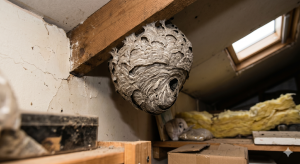
Lofts are particularly common nesting sites in UK homes due to their warmth, dryness, and lack of disturbance. Once established, nests in these areas can grow undetected for weeks.
Early Warning Signs of a Wasp Nest
Identifying a nest early can significantly reduce risk and simplify removal. The most common signs include:
1. Repeated Wasp Flight Patterns
One of the clearest indicators is seeing wasps repeatedly entering and exiting the same point, such as a gap in brickwork, roofline, or soffit.
This usually indicates a nest hidden behind the structure.
2. Increased Wasp Activity in One Area
A sudden concentration of wasps around a specific part of the property is often an early warning sign.
This may include:
- Roof edges
- Shed corners
- Window frames
- Garden structures
Wasps tend to focus activity around nest entrances.
3. Buzzing or Rustling Sounds Indoors
In lofts or wall cavities, a faint but persistent buzzing noise may be audible when the nest is active.
In some cases, a papery rustling sound can also be heard as the nest expands.
4. Papery Nest Material Near Entry Points
Wasps build nests using chewed wood fibres, which dry into a papery material. Small flakes may be visible near entry holes or on windowsills.
5. Indoor Wasps Appearing Regularly
Finding wasps indoors, especially in upper rooms or near ceilings, often indicates a nest within the structure itself.
This is particularly common when nests are located in loft spaces.
When a Wasp Nest Becomes a Serious Problem
Not every nest requires immediate intervention, but certain conditions significantly increase risk levels.
1. High Wasps Traffic and Visible Swarming
If large numbers of wasps are consistently seen entering and exiting a single location, the nest is likely well established.
At this stage:
- The colony is actively expanding
- Disturbance may trigger defensive swarming
- Risk of multiple stings increases significantly
This is typically when professional removal becomes necessary.
2. Nests Near Entrances or Living Areas
Nests close to high-traffic areas present a direct safety risk.
Common problem locations include:
- Front and back doors
- Patios and garden seating areas
- Play areas for children
- Window frames and ventilation points
Even normal daily activity can unintentionally disturb the nest, leading to aggressive responses.
3. Large or Mature Nest Development
As nests grow in late summer, they can house thousands of wasps. Larger colonies are more defensive and more likely to respond aggressively to perceived threats.
At this stage:
- DIY treatment becomes significantly more dangerous
- Disturbance can result in mass wasp attacks
- Complete removal becomes more complex
4. Indoor Structural Nests (Lofts and Walls)
Nests inside buildings are particularly serious due to limited access and close proximity to living spaces.
Risks include:
- Wasps entering bedrooms or living areas
- Difficulty locating the exact nest position
- Structural voids allowing hidden expansion
Loft nests are especially common and often only discovered when activity becomes severe.
5. Aggressive Behaviour and Defensive Swarming
Wasps become increasingly aggressive in late summer. If they begin reacting to movement, vibrations, or noise, the nest is likely at peak defensive stage.
Warning behaviours include:
- Wasps hovering aggressively near people
- Sudden swarming when areas are approached
- Increased stinging incidents
At this point, the nest should be treated as high risk.
Risks Associated with Active Wasp Nests
A fully active nest presents several serious risks:
Stings and Medical Reactions
Wasps can sting multiple times and inject venom that causes:
- Painful swelling
- Allergic reactions
- Severe anaphylaxis in sensitive individuals
Even non-allergic reactions can be extremely painful and disruptive.
Mass Swarming Events
If a nest is disturbed, wasps may defend it collectively, resulting in multiple simultaneous stings.
This is particularly dangerous near:
- Entrances
- Garden paths
- Loft access points
Restricted Use of Property Areas
High activity nests can make parts of a property unusable, especially gardens and loft spaces.
Psychological Stress
Constant wasp presence can create anxiety and avoidance behaviour, particularly in families with children or pets.
Why DIY Wasp Nest Removal Is Risky
Attempting to remove a wasp nest without proper equipment and training carries significant risks.
Common issues include:
- Incomplete treatment leaving the nest active
- Aggressive response from disturbed wasps
- Misidentifying nest location
- Lack of protective clothing and equipment
- Wasps relocating deeper into the structure
Incorrect treatment often worsens the situation rather than resolving it.
When Professional Wasp Nest Removal Is Essential
Professional pest control is strongly recommended when:
- The nest is large or actively expanding
- It is located in a loft, wall, or inaccessible space
- Wasps are entering living areas
- There is a risk of allergic reaction in occupants
- DIY methods have already failed
Professionals use targeted insecticidal treatments designed to reach the core of the nest, ensuring full colony elimination including the queen.
Seasonal Timing and Why It Matters
Timing is one of the most important factors in wasp nest control.
- Spring: Small nests, easiest and safest to treat
- Early summer: Rapid growth begins
- Late summer: Peak aggression and maximum danger
- Autumn: Natural decline but still risky if disturbed
Early intervention is always safer, less disruptive, and more effective than late-stage treatment.
Prevention Tips to Reduce Wasp Nest Formation
Preventing nests is far more effective than dealing with established colonies.
- Sealing gaps in rooflines, vents, and brickwork
- Repairing damaged soffits and fascia boards
- Keeping bins tightly sealed and away from entrances
- Removing sugary food sources from gardens promptly
- Installing mesh over vents and air bricks
- Regularly inspecting lofts and sheds in early spring
Early spring inspections are particularly effective, as queens are actively searching for nesting sites during this period.
Practical Pest Prevention Tips for Homes and Businesses in Wokingham
- Are Bed Bugs Becoming More Common in the UK? What the Data Shows
- How to Stop Pigeons Nesting on Your Roof in Wokingham
- How Pigeons Damage Roofs, Solar Panels, and Gutters in UK
- Why Semi-Detached and Terraced Homes in Wokingham Are More at Risk of Pests
- Wasp Nest Removal in the UK: When It Becomes a Serious Problem
- How Pest Control Failures Can Affect Your Food Hygiene Rating
- Why Rodent Problems Are Worse in Urban Areas Like London and Wokingham
- Signs of a Rodent Infestation You Should Never Ignore